


So you’ve got a young footy fan who’s keen to pull on the boots and chase that NRL dream. Whether they’re dreaming of running out at a big stadium or just want to have a crack with their mates at the local club, building the right skills early makes all the difference.
I’ve put together a practical checklist that’ll help your junior player develop the fundamentals the right way. This isn’t about turning them into a star overnight – it’s about building a solid foundation that’ll serve them well as they progress through the ranks.
Let’s get into it.
What You’ll Need Before You Start
Before we dive into the skills, let’s make sure you’ve got the basics covered:
- A proper fitting footy – Size 3 for under 7s, size 4 for under 9s, size 5 from under 13s onwards
- Mouthguard – Non-negotiable, get one fitted properly
- Boots – Moulded soles for juniors, no metal studs until older age groups
- Water bottle – Hydration is key, especially during those hot afternoons
- Cones or markers – Even old drink bottles with some sand will do
- A willing training partner – Mum, dad, sibling, or a mate from the club
Step 1: Master the Catch – The Foundation of Everything
Every great play in Rugby League starts with catching the ball cleanly. You can’t run, pass, or score if you can’t take the pill under pressure.
The drill: Start with simple chest passes from about five metres apart. Progress to:
- High balls
- Low balls (scooping off the ground)
- Balls thrown slightly to either side
Coach tip: Get your junior to call for the ball every time. “Mine!” or “Got it!” builds confidence and communication habits that carry through to senior footy.
Step 2: Passing – Left and Right, No Excuses
Here’s a truth bomb – if your junior can only pass one way, they’ll hit a ceiling fast. The best playmakers can fire a pass left or right with equal accuracy.
The progression:
- Stationary passes – Stand side-on to your target, push through with both hands
- Walking passes – Add movement while maintaining accuracy
- Running passes – Full speed, hitting the target on the move
- Passing under pressure – Have someone shadow them as they pass
- Hold the ball in both hands, fingers spread across the seams
- Push through the ball, don’t slap or throw it
- Follow through towards your target – your hands should finish pointing at where you want the ball to go
- Spin is good, but only if it’s tight – wobbling passes are harder to catch
Step 3: Footwork – Beat Your Opponent One-on-One
You know what separates a good junior player from a great one? Their ability to make a defender miss in a phone box. Watch any top-level game and you’ll see players beat defenders with subtle footwork, not just speed.
The drills:
The Side Step:
- Place two cones five metres apart
- Run towards the first cone, plant your outside foot, and push off to change direction
- Keep your shoulders square to the defence – don’t telegraph your move
- As you approach the defender, take short, choppy steps
- This freezes them, then you accelerate into the gap
- Think of it like a boxer setting up a punch
- Run directly at the defender
- At the last moment, dip your shoulder and run a curved line around them
- Don’t slow down – the change of direction should be smooth
Step 4: Tackling – Safe and Effective
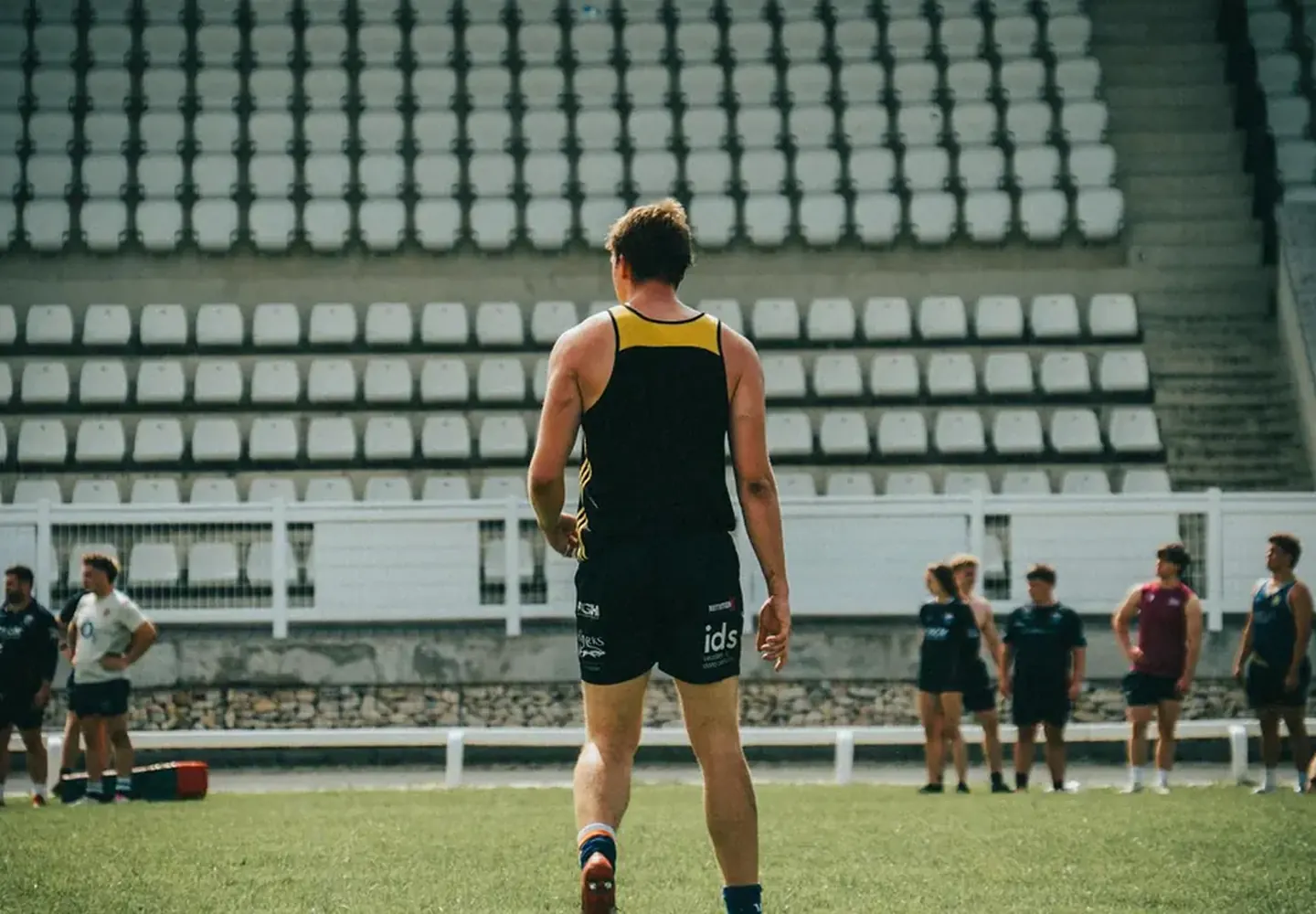
This is the non-negotiable skill in Rugby League. Every player needs to tackle and be comfortable being tackled. But safety comes first.
The safe tackling progression:
- Body position first – Head to the side, cheek pressed against the opponent’s thigh or hip
- Footwork into contact – Drive through with your legs, not just your upper body
- Wrap and squeeze – Arms go around the legs, squeeze tight
- Leg drive – Keep pumping your legs to complete the tackle
- Never lead with your head – this is how serious injuries happen
- Don’t grab high – it’s ineffective and can lead to penalties
- Avoid arm-only tackles – use your whole body
For safety guidance, always consult your local club’s qualified coaching staff or a sports medicine professional if you have concerns about tackling technique.
Step 5: Kicking – More Than Just a Boot
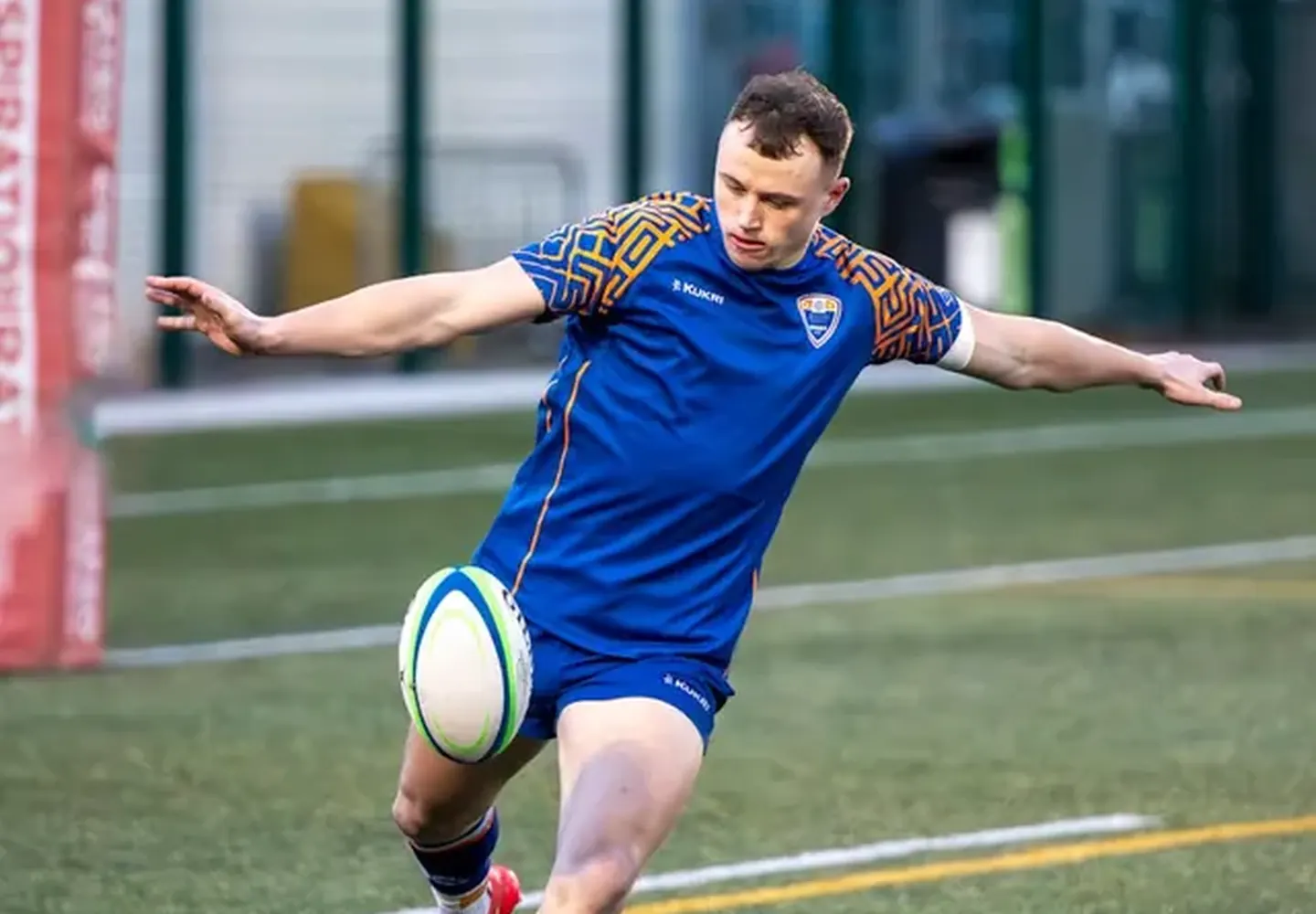
While Rugby League isn’t Aussie Rules, kicking is still a vital skill. Whether it’s a clearing kick from your own end or a grubber into the in-goal, juniors need to develop this early.
The three essential kicks:
The Punt (for distance):
- Hold the ball at a slight angle, laces facing away from your body
- Drop the ball onto your foot – don’t throw it up
- Strike through the ball, not just at it
- Follow through high
- Kick the top half of the ball so it bounces along the ground
- Aim for it to bounce up awkwardly for defenders
- Practice this with a target near the try line
- Kick the bottom of the ball to get maximum height
- The goal is to give your chasers time to get under it
- Practice this into the wind to build strength
Step 6: Game Awareness – The Mental Side
Skills are nothing without a footy brain. The best juniors understand where to be and when.
Develop game sense through:
Watching footy with purpose:
- Pick a player in your position and watch only them for a full set of six
- Notice where they stand in defence
- See how they support the ball carrier
- Set up 2v1 or 3v2 scenarios
- The ball carrier has to decide: pass, run, or kick
- Start with no defenders, then add them in
- Call for the ball every time
- Talk in defence – “Left!” “Right!” “I got him!”
- Use short, sharp commands
Step 7: Fitness and Conditioning – Rugby League Ready
You can have all the skill in the world, but if you’re gassed after five minutes, you’re useless to your team.
Age-appropriate fitness:
For under 8s and under 9s:
- Focus on fun games that involve running
- Tag games, relays, chase games
- Keep it playful – don’t turn them into gym rats
- Introduce short interval running (20m sprints, walk back)
- Bodyweight exercises – squats, lunges, push-ups
- Agility ladder work
- Build running volume gradually
- Include change-of-direction work
- Start basic strength work with proper supervision
For a full program tailored to juniors, have a look at our fitness-conditioning-program guide.
Step 8: Position-Specific Skills
Once your junior has the basics down, start thinking about position. But here’s the thing – don’t specialise too early. The best players can play multiple positions.
For backs (fullback, wing, centre):
- High ball practice every session
- Finishing drills – scoring in the corner
- Support play – always be there for the offload
- Passing accuracy under pressure
- Kicking game – all three types
- Decision-making – when to run vs pass vs kick
- Tackle technique – you’ll make more tackles than anyone
- Ball security – protect the pill in contact
- Offloading – keep the ball alive
- Passing from dummy half – quick and accurate
- Defensive reads – you’re the organiser
- Service from the ruck – speed is everything
Common Mistakes Junior Players Make (And How to Fix Them)
Mistake 1: Playing too upright Fix: Stay low in contact. Imagine there’s a ceiling above your head – you want to stay under it.
Mistake 2: Watching the ball instead of the play Fix: Train your eyes to scan the defence, not stare at the footy.
Mistake 3: Not using both sides of the body Fix: Every drill should be done left AND right. No excuses.
Mistake 4: Panicking under pressure Fix: Practice with defenders closing you down. Get comfortable being uncomfortable.
Mistake 5: Neglecting the little things Fix: Catch 50 balls before training. Do 20 passes each side. The basics win games.
Pro Tips for Parents and Coaches
- Keep it fun – If they’re not enjoying it, they won’t improve
- Praise effort, not just results – A great try-saver is as valuable as a try
- Film their training – Show them what they look like, it’s the fastest way to improve
- Mix it up – Don’t do the same drills every session
- Rest matters – Young bodies need recovery time
Your Junior Player Skills Checklist (Summary)
Here’s your quick reference checklist. Print it out, stick it on the fridge, tick off each skill as it develops:
- Catching – Clean hands, soft catch, eyes on the ball
- Passing – Accurate left and right, proper technique
- Footwork – Side step, stutter step, swerve
- Tackling – Safe technique, head to the side, wrap and drive
- Kicking – Punt, grubber, bomb – all three types
- Game awareness – Scanning, communicating, decision-making
- Fitness – Age-appropriate conditioning, consistent effort
- Position skills – Basic role understanding, versatility
- Attitude – Coachable, hard-working, team-first mentality
Where to From Here?
Once your junior has these skills locked in, it’s time to take the next step. Check out these resources to keep the development rolling:
- Junior Footy Modifications – Understanding the rules and formats for different age groups
- Training Drills for Beginners – More drills to build on the basics
- Player Development Gear – What equipment actually helps with skill development
- Set Shot Kicking Tips – For when they start eyeing off those conversion attempts
- Fitness Conditioning Program – Build that Rugby League engine the right way
Your junior can do the same. This checklist is their roadmap. Now it’s time to get out there and start ticking boxes.
See you at the footy.
Reader Comments (0)