


Junior Rugby League Rules Simplified for Parents
For parents new to rugby league, the transition from spectator to active supporter of a junior player can be accompanied by a steep learning curve. The National Rugby League (NRL) is a fast, physical, and highly structured sport, and its junior variations are designed to introduce children to the game in a safe, developmental environment. This pillar guide aims to demystify the core rules of junior rugby league, providing a clear framework for parents to understand what is happening on the field, why certain decisions are made, and how the game fosters skill progression and player welfare.
Understanding the foundational rules is not merely about following the match; it is about appreciating the pathways that lead to elite competition. From the first touch of the ball at a local park to the roar of the crowd at a major stadium, the principles remain consistent. This guide will break down the essential elements, from the tackle count to the scoring system, ensuring you are well-equipped to support your young athlete.
The Philosophy of Junior Rugby League: Safety and Development
Before examining specific rules, it is critical to understand the overarching philosophy of junior rugby league. The NRL and its affiliated bodies prioritise player safety and long-term skill acquisition over early specialisation or winning at all costs. This is reflected in modified rules for younger age groups.
- Modified Games (e.g., Mini and Mod League): For children aged 6 to 11, the game is significantly altered. There are no scrums, no kicks in general play, and tackling is restricted to below the armpits. These modifications ensure that children learn fundamental skills—passing, catching, running lines, and basic evasion—without the complexities and physical risks of the full code.
- Focus on Participation: The primary objective is to keep all children engaged. Rules such as mandatory playing time for all registered players, regardless of skill level, are enforced. This developmental ethos is a direct feeder into the professionalism of the NRL Premiership.
The Core of the Game: Possession and the Tackle Count
The most distinctive feature of rugby league is the tackle count, which governs possession. This is the fundamental rhythm of the game.
The Six Tackle Rule: A team in possession of the ball is allowed six consecutive tackles to advance the ball and score. After the sixth tackle, the ball must be kicked to the opposition. If the team fails to score or kick the ball before the sixth tackle is completed, possession is turned over.
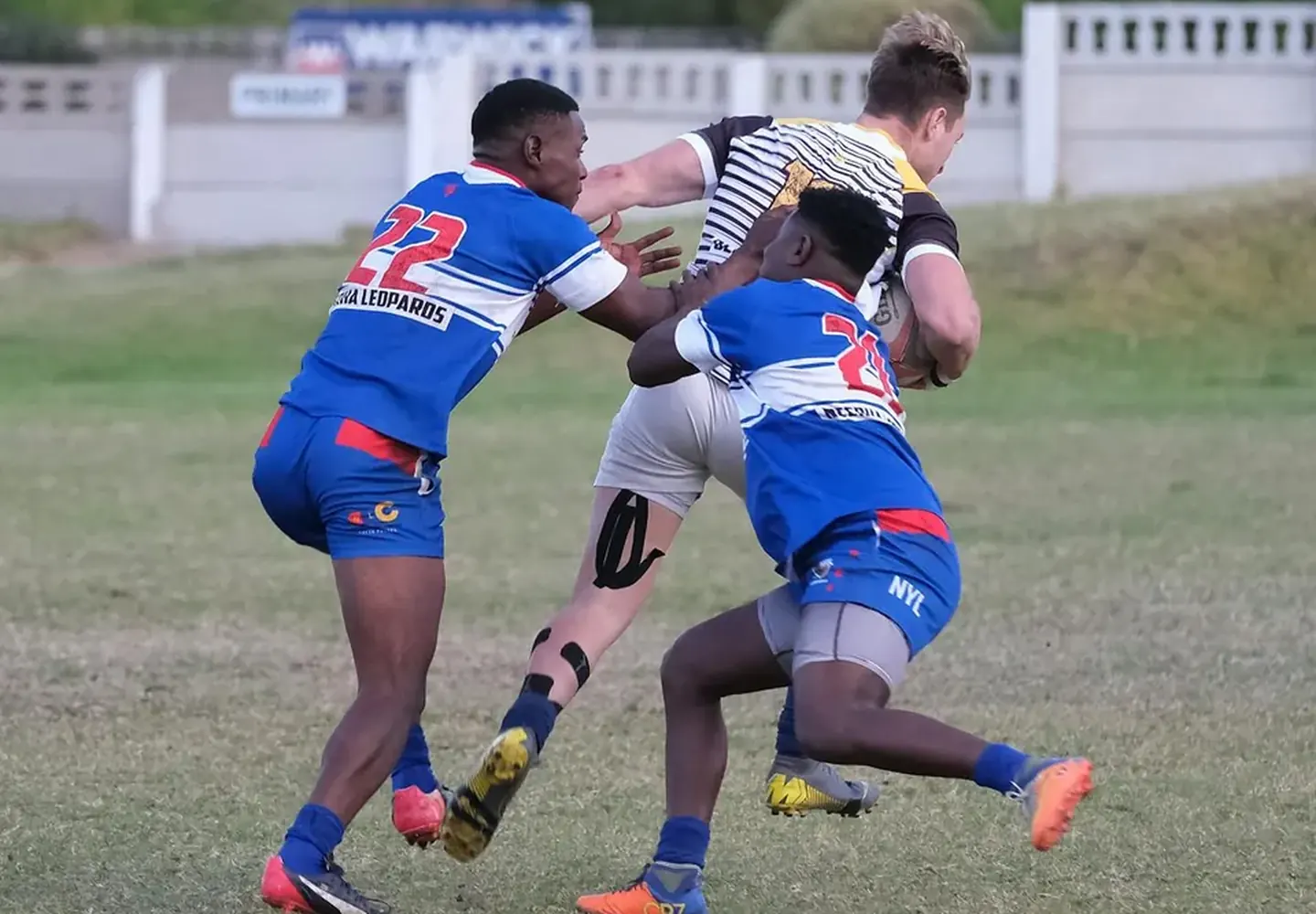
How a Tackle Works: A tackle is completed when a player in possession of the ball is held by one or more defenders and brought to the ground, or when a standing player is firmly held and prevented from moving forward. The referee will call “held” and the play-the-ball commences.
- The Play-the-Ball: After a tackle, the tackled player must stand up, place the ball on the ground, and roll it backwards with their foot to a teammate (the dummy-half). This is the reset point for the next tackle.
- The Defensive Line: The defending team must retreat 10 metres back from the play-the-ball. This creates space for the attacking team to run. A team that fails to retreat is penalised.
Scoring: Tries, Goals, and the Difference
Scoring in rugby league is straightforward, but the terminology is specific.
- Try (4 points): The primary method of scoring. A try is awarded when a player grounds the ball in the opposition’s in-goal area. The ball must be placed with downward pressure.
- Conversion Goal (2 points): After a try, the scoring team has a chance to kick the ball through the uprights (the goal posts) from a point directly in line with where the try was scored. This is a “conversion.”
- Penalty Goal (2 points): A team may choose to kick for goal from a penalty award. This is a tactical decision, often used to build a scoreboard lead.
- Field Goal (1 point): A drop-kick (where the ball is dropped and kicked as it hits the ground) that goes through the uprights during general play. This is rare in junior leagues but is a crucial skill in high-level competition.

Key Positions and Their Roles
While the full NRL Draw features complex positional rotations, junior rugby league simplifies roles to ensure every child learns the fundamentals of attack and defence.
- Fullback (No. 1): The last line of defence and the primary receiver of kicks. They must be safe under the high ball and a good support runner.
- Wingers (Nos. 2 & 5): Speedsters who finish tries. They are stationed on the edges of the field.
- Centres (Nos. 3 & 4): Hard-running players who combine power and speed. They are the link between the halves and the wingers.
- Halves (Halfback No. 7 & Five-Eighth No. 6): The playmakers. They control the team’s structure, kick for position, and decide when to pass or run. This is a highly demanding role, even in junior grades.
- Forwards (Props, Hooker, Second Row, Lock): The engine room. They are responsible for gaining tough metres through the middle of the field. In junior leagues, these players often rotate frequently to manage fatigue.
The Ruck, the Ruck Infringements, and the Ruck Speed
The “ruck” is the area immediately surrounding the play-the-ball. It is the most contested and technically demanding part of the game.
- The Mark: The point on the field where the referee calls “held.” The defending team must stand on their own side of the mark.
- Offside: If a defender is not 10 metres back from the mark when the play-the-ball occurs, they are offside. This results in a penalty to the attacking team.
- Flop or Slow Play: Defenders are not allowed to deliberately slow down the play-the-ball by lying on the tackled player or interfering with the dummy-half. This is a common penalty in junior rugby league to encourage a fast, flowing game.
- The Ruck Infringement: This covers any illegal act in the tackle or play-the-ball, such as a high tackle, a crusher tackle (dangerous neck pressure), or a professional foul.
The Kick and the 40/20 Rule
Kicking is a strategic weapon. While younger juniors do not kick in general play, older age groups (12+) introduce this dimension.
- The 40/20: A kick from a team’s own 40-metre line that bounces into touch (out of bounds) inside the opposition’s 20-metre line. This results in a scrum feed to the kicking team. It is a high-risk, high-reward play.
- The Bomb: A high, hanging kick designed to give the chasing team time to contest the catch. The fullback is the primary target.
- The Grubber: A low, bouncing kick along the ground, often used near the try line to force a handling error or to create a race for the ball.
The Offside Rule and The Mark
The offside rule is the primary mechanism for maintaining attacking structure.
- The 10-Metre Rule: As mentioned, defenders must be 10 metres back from the play-the-ball. The referee enforces this with a line.
- The Mark: This is the exact spot where the play-the-ball occurs. The defending team cannot cross this line until the ball is played.
- The Penalty: If a defender is offside and interferes with play (e.g., tackles a player early), the attacking team receives a penalty. If the offside is not interfering, the referee will call “six again” (a new set of six tackles) rather than a penalty, keeping the game flowing.
Penalties, Scrums, and Set Restarts
Penalties: A penalty is awarded for serious infringements (high tackle, offside, stripping the ball, dissent). The non-offending team can either:
- Take a tap kick (tap the ball on the foot and run).
- Kick for touch (gain 50 metres of field position).
- Kick for goal (attempt a penalty goal).
- Take a scrum.
Set Restarts (Six Again): Introduced to increase speed, a “six again” call occurs when the defending team is offside but does not interfere. Instead of a penalty, the referee blows a whistle and declares “six again,” giving the attacking team a fresh set of six tackles. This rewards quick play-the-balls and punishes slow defensive retreats.
Player Welfare: Concussion, Substitutions, and Age Restrictions
This is the most critical section for parents.
- Concussion Protocols: The NRL has strict rules. Any player suspected of a concussion must be immediately removed from the field and cannot return. In junior rugby league, this is non-negotiable. The player must undergo a graded return-to-play protocol overseen by a qualified professional.
- Interchange (Substitutions): Junior teams have unlimited interchange (players can come on and off the field multiple times). This is to manage fatigue and ensure player safety. Coaches are encouraged to rotate players frequently.
- Age Restrictions: Players must play in their designated age group. A 14-year-old cannot play in the under-16s. This is strictly enforced to prevent mismatches in physical development.
- Weight Restrictions: Some junior leagues have weight limits to protect smaller players from larger opponents. This is a safety measure, not a skill assessment.
The Role of the Referee and Touch Judges
The referee is the sole judge of fact on the field. In junior rugby league, referees are often developing their skills as well. They are there to enforce the laws of the game and ensure safety.
- Touch Judges: They assist the referee with decisions on the sideline (whether the ball goes into touch) and near the try line (whether a try is scored).
- The Captain’s Challenge: This is an NRL-specific rule (not used in junior leagues) where a team captain can challenge a referee’s decision. In junior footy, the referee’s decision is final.
Conclusion: From the Local Park to the Stadium
Understanding the rules of junior rugby league transforms the match-day experience from a confusing spectacle into an engaging tactical contest. You will begin to notice the discipline required to maintain the defensive line, the skill involved in a quick play-the-ball, and the bravery of a fullback taking a high bomb under pressure. These are the same principles that underpin the success of teams at the highest level.
For your child, the journey is not about mastering every rule immediately. It is about learning to play with courage, to respect the referee, and to work as a team. The NRL Premiership is built on these foundations.
To further support your understanding of the game and your child’s development, we recommend exploring our related guides. You can learn more about the essential equipment in our player development gear section, understand how to properly maintain the club’s colours with our guernsey care guide, and track your child’s progress against established benchmarks in our NRL player skill progression milestones. These resources are designed to complement your child’s journey from their first game to their first try at the stadium.
Reader Comments (0)