


So you want to get your passing game up to scratch? Whether you're a junior player just starting out, a parent helping your kid train in the backyard, or a grassroots footy fan looking to sharpen up before weekend touch footy, you've come to the right place. Passing is the bread and butter of rugby league—get this right, and everything else flows. Get it wrong, and you'll be handing the ball to the opposition faster than you can say "forward pass."
In this guide, I'll walk you through a practical checklist of passing drills designed for beginners. These are foundational skills that players at all levels drill day in, day out at training. By the end, you'll have a simple, repeatable routine you can run solo, with a mate, or with a whole team. Let's get into it.
What You'll Achieve
By the end of this article, you'll be able to:
- Execute a basic spin pass with accuracy and speed
- Understand the mechanics of a cut-out pass and a short ball
- Improve your catching and passing under pressure
- Build muscle memory through repetition
- Avoid common beginner mistakes that kill attacking momentum
Prerequisites / What You Need
Before you start, grab these basics:
- A rugby league ball – Size 4 for juniors (under 12s), size 5 for everyone else. Don't use a union ball; the shape is different.
- A partner – Ideally someone who can catch and return passes. If you're solo, a brick wall works fine.
- Cones or markers – Anything from actual cones to shoes, water bottles, or even socks. You'll need at least four.
- Open space – A park, oval, or backyard. Avoid concrete if you're diving for loose balls.
- Water bottle – Stay hydrated. This isn't a gym session, but you'll still sweat.
- Optional: A phone or camera to film yourself. It's the best way to spot bad habits.
Step 1: The Grip and Stance (Get This Right First)
Before you throw a single pass, you need to hold the ball properly. This is where 90% of beginners mess up.
The grip:
- Place your dominant hand towards the back of the ball, fingers spread across the laces (or the seam if it's a training ball).
- Your non-dominant hand sits near the front, cradling the ball lightly. You're not squeezing it—just guiding it.
- The ball should sit in your palms, not your fingertips. Think of it like holding a sandwich, not a grenade.
- Stand with feet shoulder-width apart, knees slightly bent.
- Point your front shoulder towards your target.
- Keep your head up and eyes scanning. Don't stare at the ball.
Step 2: The Basic Spin Pass (Stationary)
This is the pass you'll use 80% of the time in a game. It's accurate, quick, and hard to intercept if done right.
How to do it:
- Start in your stance, ball held correctly.
- Bring the ball back to your hip, elbows bent.
- Step forward with your front foot towards the target.
- As you step, rotate your hips and shoulders towards the target.
- Release the ball with a wrist flick—your fingers should spin the ball backwards (like a spiral).
- Follow through with your hands pointing at the target.
- Stand 5 metres apart from your partner.
- Pass the ball back and forth, focusing on the spin and accuracy.
- Do 20 passes each side (left and right).
- Gradually increase distance to 10 metres, then 15.
Step 3: The Cut-Out Pass (Moving the Ball Wide)
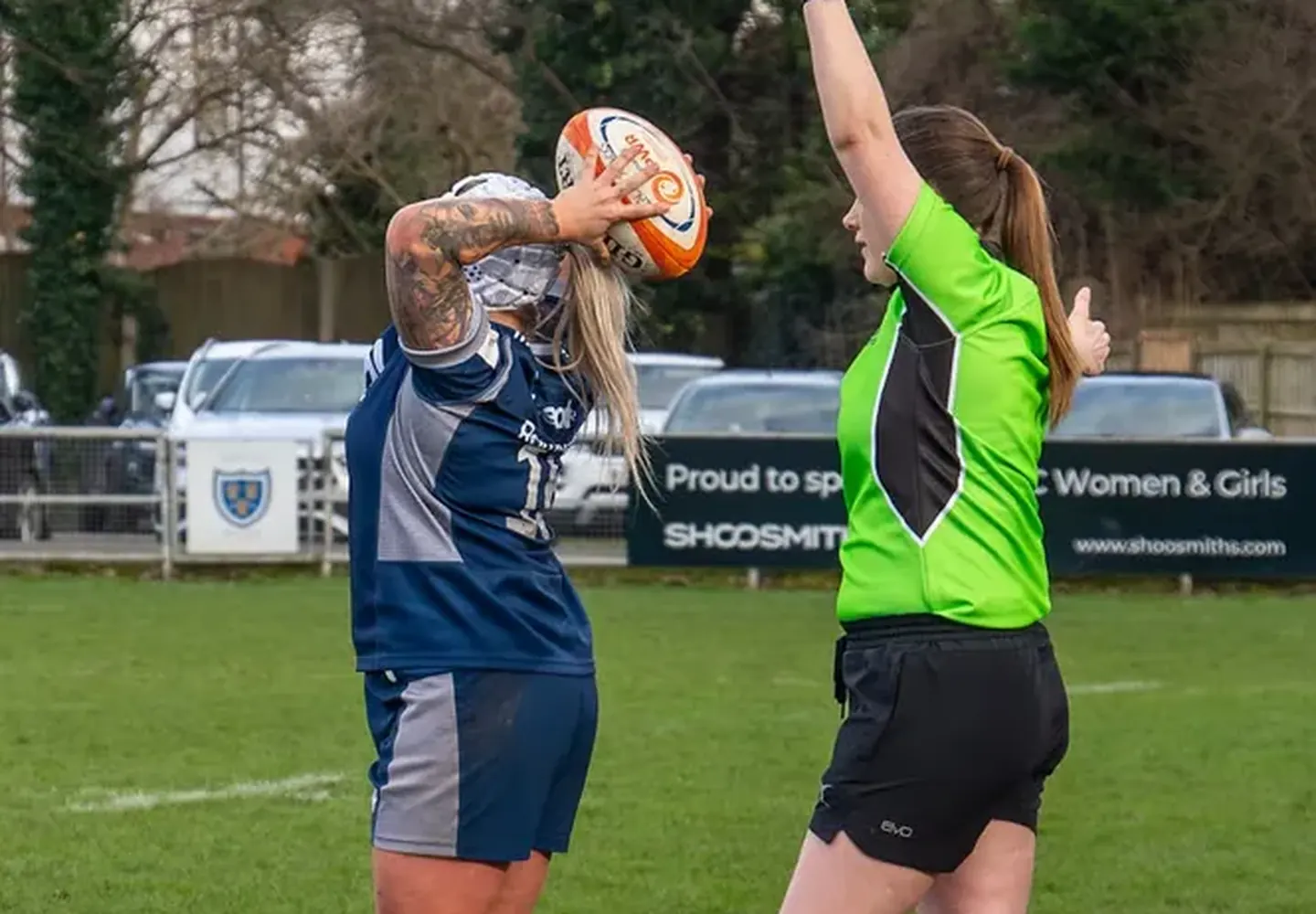
A cut-out pass skips one or two players to hit an outside runner. It's a staple of many attacking structures—you'll see it used to put a winger into space.
How to do it:
- Same grip and stance as the basic pass.
- Aim to release the ball earlier than you think—this gives it time to travel.
- Use a slightly flatter trajectory (less arc) to get there faster.
- Follow through aggressively, pointing at the receiver.
- Set up three cones in a line: one for you, one 5 metres to your left (the "dummy" player), and one 10 metres wide (the target).
- Pass the ball over the middle cone to the far cone.
- Your partner stands at the far cone to catch.
- Repeat 15 times, then switch sides.
Step 4: The Short Ball (For Close Quarters)
In tight traffic near the try line, a long pass isn't an option. You need a crisp, short ball to hit a runner on your inside.
How to do it:
- Hold the ball with two hands close to your chest.
- Use a quick, compact motion—no big wind-up.
- Flick your wrists to spin the ball over a short distance (2–3 metres).
- Keep your elbows tucked in.
- Stand 2 metres from a partner.
- Have a third person (or a cone) stand behind you as a "defender."
- Pass the ball quickly to your partner, then receive it back.
- Do 10 reps, then swap roles.
Step 5: Passing on the Move (Game Realism)
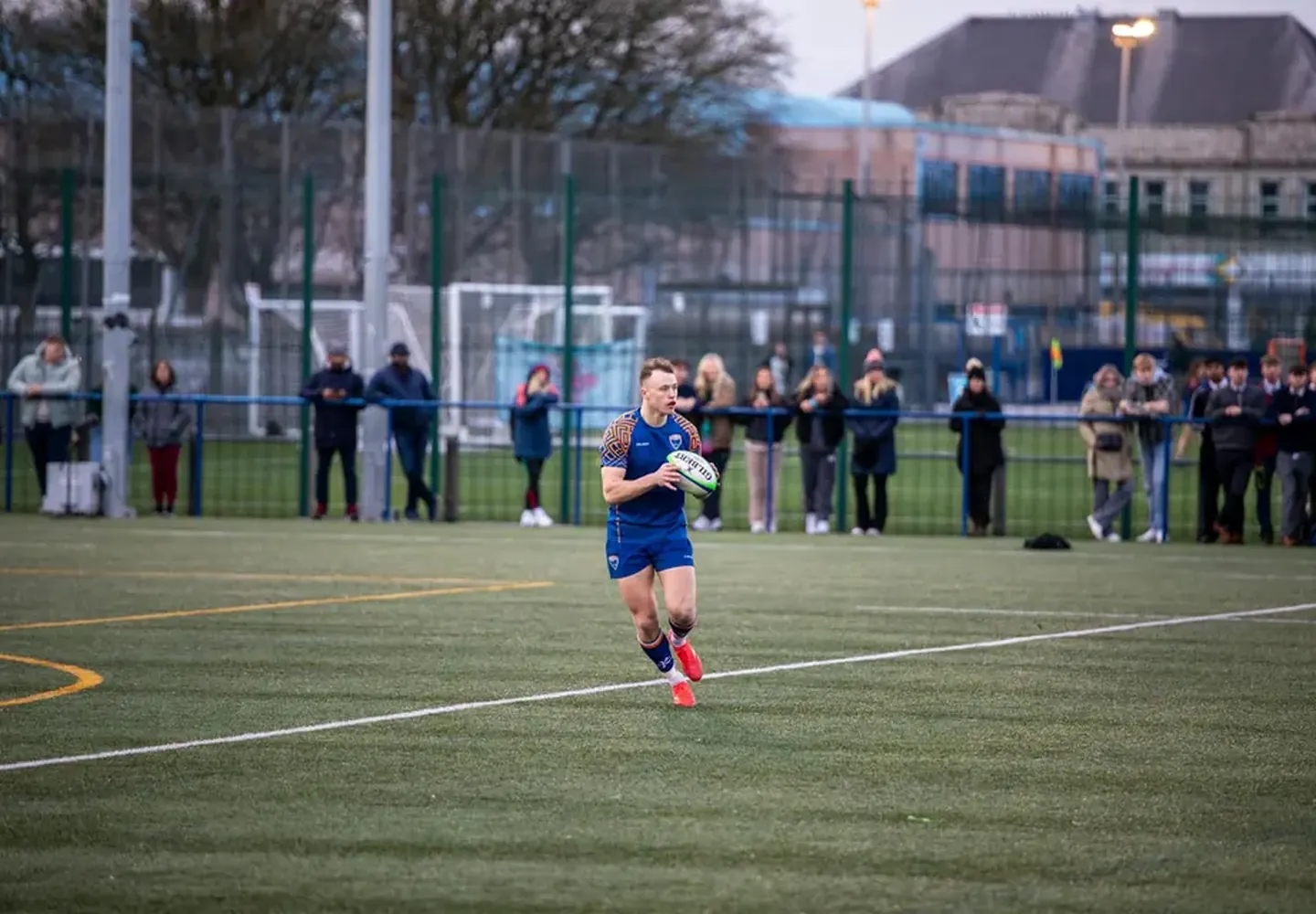
Footy isn't played standing still. You need to pass while running, changing direction, and under fatigue.
Drill – Run and pass:
- Set up two cones 10 metres apart.
- Start at one cone, jog towards the other.
- As you approach the second cone, pass the ball to a partner standing 5 metres to your side.
- Your partner passes it back, and you repeat going the other way.
- Do 10 reps each direction.
- Have your partner run alongside you, about 5 metres away.
- They pass to you while you're both jogging.
- Catch, then immediately pass back.
- Focus on keeping your hands up and ready.
Step 6: Catching the Pass (The Other Half)
You can't pass well if you can't catch. Beginners often forget this.
How to catch:
- Present a target with your hands—palms out, fingers spread.
- Watch the ball all the way into your hands.
- "Soft hands" – let the ball come to you, don't snatch at it.
- Secure the ball against your chest or ribs immediately.
- Have your partner throw passes at different heights (chest, waist, knees, above head).
- Catch and quickly pass back.
- Do 15 reps.
Step 7: Passing Both Ways (Don't Be a One-Sided Player)
Most beginners favour their dominant side. In a game, you'll need to pass left and right equally.
Drill – Mirror passing:
- Stand facing your partner, 5 metres apart.
- Pass to your right, they pass back.
- Pass to your left, they pass back.
- Alternate sides every 5 reps.
- Do 20 total.
Step 8: Passing Under Fatigue (Game Simulation)
Games are fast and tiring. If you can't pass when you're puffed, you'll turn over the ball.
Drill – High-intensity passing:
- Do 10 burpees or star jumps.
- Immediately grab the ball and complete 5 passes to a partner (alternating sides).
- Rest 30 seconds.
- Repeat 4 times.
Pro Tips / Common Mistakes
Pro tips:
- Film yourself. You'll spot things you can't feel—like dropping your elbow or not following through.
- Use a slightly deflated ball for training. It's heavier and forces you to use proper technique.
- Practise in wet weather if you can. A wet ball changes everything.
- Warm up properly before these drills. Check out our rugby league warm-up routine for a quick 10-minute sequence.
- Throwing with a flat palm – No spin, no accuracy. Flick those wrists.
- Looking at the ball when passing – You lose vision of the field. Trust your hands.
- Standing too upright – You lose power and balance. Stay low.
- Passing too hard – Accuracy drops. Smooth is fast.
- Not following through – Your pass will float or wobble. Point where you want the ball to go.
Checklist Summary
Use this checklist before and during your training session:
- Grip the ball correctly – dominant hand on laces, guide hand light
- Stance – feet shoulder-width, knees bent, front shoulder to target
- Basic spin pass – step, rotate hips, flick wrists, follow through
- Cut-out pass – release early, flat trajectory, point at receiver
- Short ball – compact motion, two hands, quick wrists
- Passing on the move – run, catch, pass without stopping
- Catch properly – soft hands, eyes on ball, secure quickly
- Pass both ways – equal reps left and right
- Train under fatigue – burpees or star jumps before passing
- Warm up and cool down – see our warm-up routine for guidance
Passing in rugby league isn't complicated, but it takes repetition. The best players make it look easy because they've done it thousands of times. You don't need to be at a professional stadium to train like them. A park, a ball, and a mate are all you need.
Remember: start slow, focus on technique, and build up speed. If you're a parent coaching a junior team, keep it fun. If you're a player trying to crack the local side, stay consistent. And if you're a fan dreaming of the NRL Grand Final one day? Well, every champion starts with the basics.
For more practical guides like this, check out our player development and gear hub and don't forget to prepare properly with a game day preparation checklist.
Now grab a ball and get passing. See you on the field.
Reader Comments (0)