


If you’ve ever watched a top-tier rugby league side rip through a defensive line in the final 20 minutes of a match, you know their fitness isn’t an accident. It’s a product of meticulous planning, smart conditioning, and a culture built around being one of the fittest teams in the competition.
But here’s the thing—you don’t need to be an NRL star to train like one. Whether you’re a grassroots player looking to break into the local comp, a coach trying to lift your club’s standards, or just a fan who wants to feel as sharp as your favourite player on a Sunday morning, this checklist is for you.
We’re going to break down the essential components of a proper fitness and conditioning program, inspired by what makes elite sides so dangerous. No fluff, no gimmicks—just practical steps you can apply to your own training.
By the end of this article, you’ll have a clear, actionable checklist to build your own conditioning program. Let’s get into it.
What You’ll Need Before You Start
Before you hit the field, make sure you’ve got the basics sorted:
- A training space – A local oval, park, or even a backyard will do. A stadium isn’t required, but a flat, open area helps.
- Basic gear – Running shoes, training kit (your club jersey optional but recommended), a water bottle, and a stopwatch or phone timer.
- A training partner or coach – Not essential, but having someone to time your efforts and push you makes a massive difference.
- A notebook or app – Track your progress. Elite teams don’t guess their fitness—they measure it.
- Medical clearance – If you’ve got any pre-existing injuries or health concerns, get the green light from a qualified professional before starting.
Step 1: Build Your Aerobic Base (The Engine)
Every elite player has a massive engine. You can’t execute a game plan if you’re gassed after 10 minutes. The first step is building your aerobic capacity—the foundation for everything else.
How to do it:
- Start with 3–4 sessions per week of steady-state running. Think 20–40 minutes at a conversational pace (you can talk, but you’re working).
- Mix in some longer runs on weekends—45–60 minutes at a moderate pace.
- For beginners: start with 15-minute jogs and add 5 minutes each week.
Pro tip: Many teams do their aerobic work early in pre-season. Don’t skip this phase—it’s boring, but it’s non-negotiable.
Step 2: Add High-Intensity Interval Training (HIIT)
Footy isn’t a marathon—it’s a series of explosive efforts with short recoveries. That’s where HIIT comes in. This is where you start to mimic the demands of an NRL game.
How to do it:
- Shuttle runs (beep test style): Run 20 metres, touch the line, run back. Repeat for 30 seconds, rest 30 seconds. Do 6–8 reps.
- Suicides: Set cones at 10m, 20m, 30m, and 40m. Sprint to the first cone and back, then to the second and back, and so on. Rest 60 seconds between sets. Do 3–4 sets.
- Tabata-style intervals: 20 seconds of all-out effort (sprints, burpees, or star jumps), 10 seconds rest. Repeat 8 times.
Common mistake: Going too hard too early. HIIT is intense. If you’re new, start with 4–5 reps and build up.
Step 3: Incorporate Footy-Specific Drills
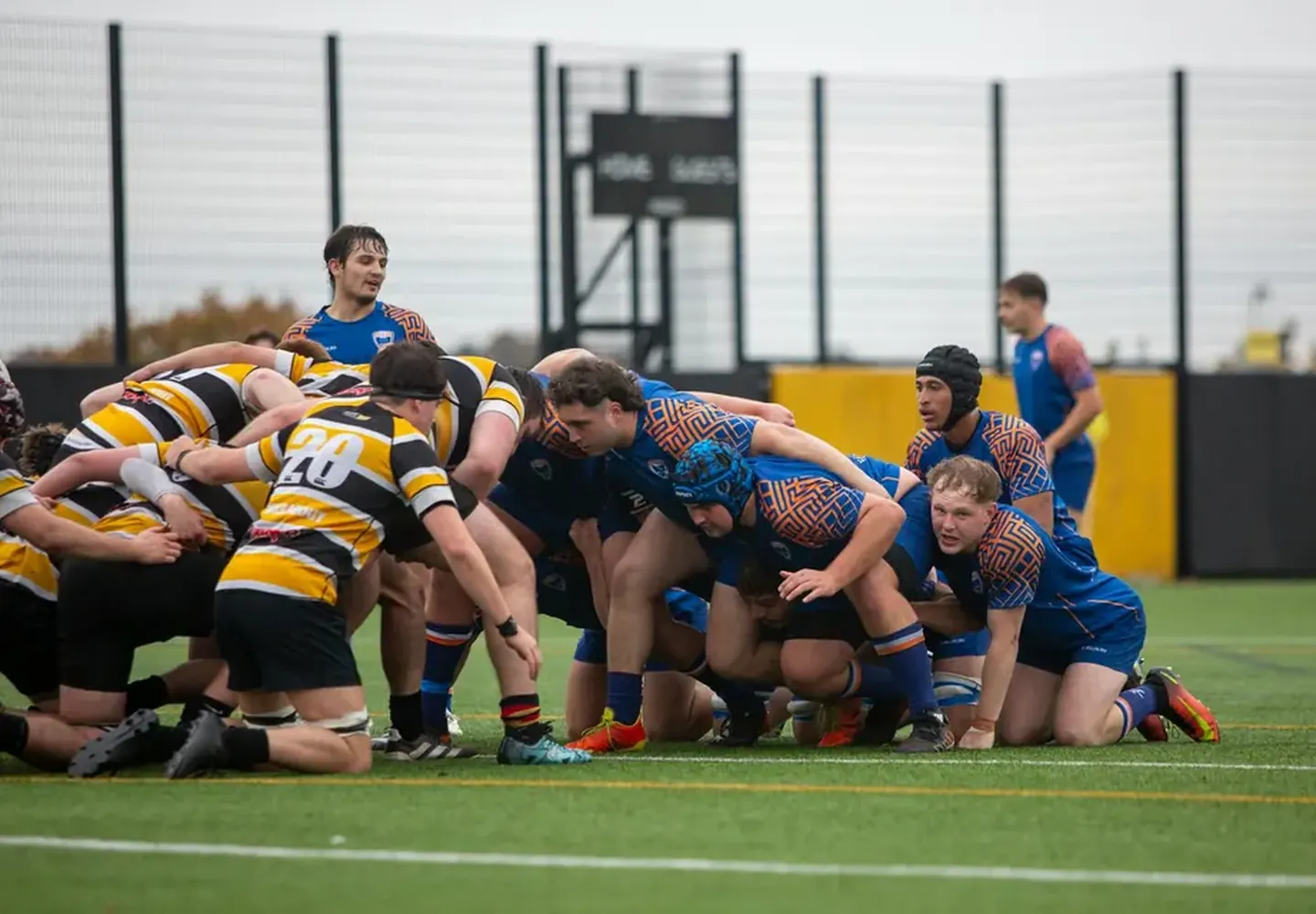
General fitness is great, but you need to train movements that actually happen in a game. This is where high-performance training centres really shine.
How to do it:
- Catch-and-pass under fatigue: Set up a partner 10 metres away. Sprint to a cone, catch a pass, turn, and pass back. Repeat 10 times with minimal rest.
- Defensive slide drills: Shuffle sideways for 5 metres, sprint forward 5 metres, then backpedal. This mimics covering a kick or chasing a break.
- Contact simulation: With a partner, do light wrestling or tackle-bag work for 30-second bursts. This builds the specific conditioning for physical contests.
Pro insight: Many coaches run drills where players have to make decisions under fatigue—like choosing to pass or run after a sprint. Add a decision-making element to your drills (e.g., “left or right” call from a coach).
Step 4: Strength and Power Work (Off-Field)
Conditioning isn’t just about running. The most physical sides in the NRL combine endurance with strength. You need to be able to absorb tackles and generate power in the 75th minute.
How to do it:
- Bodyweight circuit: 3 rounds of push-ups (15 reps), squats (20), lunges (10 each leg), planks (45 seconds), and burpees (10). Rest 60 seconds between rounds.
- Resistance training (if you have access to a gym): Focus on compound lifts—deadlifts, squats, bench press, and pull-ups. Keep reps in the 8–12 range for muscular endurance.
- Plyometrics: Box jumps, broad jumps, and lateral bounds. These build explosive power for acceleration and change of direction.
Safety note: If you’re new to strength training, work with a qualified coach or physiotherapist to learn proper form. Don’t guess your way through squats.
Step 5: Master Your Recovery (The Hidden Secret)
Elite teams don’t just train hard—they recover harder. Recovery is where your body adapts and gets stronger. Skip this, and you’ll burn out or get injured.
How to do it:
- Active recovery: On your rest days, do light activity—walking, swimming, or yoga. Nothing intense.
- Sleep: Aim for 8–9 hours per night. Many high-performance teams track sleep like it’s a stat. Treat it that way.
- Nutrition: Within 30 minutes of training, eat a mix of protein and carbs (e.g., a protein shake with a banana, or a chicken sandwich). This kickstarts muscle repair.
- Hydration: Drink water consistently throughout the day. If your urine is dark, you’re dehydrated.
For injuries: If something hurts persistently, don’t push through it. See a physio or sports doctor. Ignoring pain is how minor niggles become season-ending injuries.
Step 6: Plan Your Week (Periodisation)
You can’t train at 100% every day. Professional teams use periodisation—varying the intensity and volume of training across the week—to peak on game day.
Sample weekly plan for a grassroots player:
| Day | Session | Intensity |
|---|---|---|
| Monday | Aerobic run (30 min steady) + light stretching | Low |
| Tuesday | HIIT (shuttles) + footy drills | High |
| Wednesday | Strength session (gym or bodyweight) | Moderate |
| Thursday | Skills session (catch, pass, kick) + recovery | Low |
| Friday | Rest or light walk | Very low |
| Saturday | Game day or match simulation | High |
| Sunday | Active recovery (swim or yoga) | Low |
Adjust this based on your schedule. If you’re playing a game on Saturday, make Thursday your light day. If you’re in pre-season, you can add an extra HIIT session.
Common mistake: Doing hard sessions back-to-back. Your body needs at least 48 hours between high-intensity efforts to fully recover.
Step 7: Track Your Progress (Measure, Don’t Guess)
Professional coaching staff use GPS trackers, heart rate monitors, and video analysis. You don’t need that gear, but you do need to track something.
How to do it:
- Time your runs: Record your 1km, 2km, or beep test times once a month. Aim to improve by 5–10% over 8 weeks.
- Log your sessions: Write down what you did, how it felt, and any niggles. This helps you spot patterns (e.g., “I always feel flat after Tuesday’s session”).
- Rate your perceived exertion (RPE): On a scale of 1–10, how hard was the session? If you’re consistently hitting 9–10, you might be overtraining.
Pro Tips and Common Mistakes
Pro tips from the playbook:
- Train in your club jersey sometimes. It sounds silly, but wearing the strip connects you to the club’s standards. It’s a mental cue to work harder.
- Find a training partner. Teammates push each other. Solo training is fine, but a partner keeps you accountable.
- Listen to your body. Good coaches are famous for managing player loads. If you’re exhausted, take a light day. Better to rest than to break down.
- Warm up properly. Never start a session cold. Do 5–10 minutes of dynamic stretching (leg swings, high knees, butt kicks) and light jogging.
- Skipping the aerobic base. Jumping straight into HIIT without an engine leads to burnout and injury.
- Overtraining. More is not better. Quality over quantity. Train smart, not just hard.
- Neglecting nutrition. You can’t out-train a bad diet. Fuel your body like an athlete.
- Ignoring recovery. Rest days are not lazy days. They’re part of the program.
- Comparing yourself to NRL stars. Elite players have been training for a decade. Focus on your own progress.
Your Fitness & Conditioning Checklist
Here’s the full checklist to print, save, or stick on your wall:
- Step 1: Build your aerobic base – 3–4 steady runs per week (20–40 minutes)
- Step 2: Add HIIT – Shuttles, suicides, or Tabata (2–3 sessions per week)
- Step 3: Footy-specific drills – Catch-and-pass under fatigue, defensive slides, contact sim
- Step 4: Strength and power – Bodyweight circuit or gym work (2 sessions per week)
- Step 5: Master recovery – Sleep 8–9 hours, eat protein + carbs post-training, hydrate
- Step 6: Plan your week – Use periodisation to vary intensity (hard/easy/rest)
- Step 7: Track progress – Time your runs, log sessions, rate your effort
- Pro tip: Warm up and cool down – 10 minutes dynamic warm-up, 10 minutes stretching
- Pro tip: Listen to your body – Rest when needed, see a pro for injuries
Final Word
You don’t need to be in the NRL to train like a professional player. This checklist gives you the blueprint—aerobic base, explosive intervals, footy-specific drills, strength work, and smart recovery. Start with the first step, build gradually, and stay consistent.
Elite teams don’t win by accident. They earn it through a culture of preparation, effort, and attention to detail. You can build that same culture in your own training.
Now get out there, put on the jersey, and start your program. The next time you watch a match at the stadium, you’ll know exactly what it takes to move like they do.
Want more training tips? Check out our guides on training drills for beginners, recovery and nutrition tips, and our junior player skills checklist. For kicking technique, see our set shot kicking tips, and for winning the ball in traffic, read up on contested ball strategies.
Reader Comments (0)